wayne&wax

linkthink re: hip-hop, reggae, the US, jamaica, and anything else wayne wants to wax on

8.17.2006

(post-)reggaeton?


been meaning to write about calle 13 for a while now (^^that's them^^), and mi amiga raquel rivera just gave me a reason to finally do so. these days you can find raquel blogging at herspace, but she's also opened up a blogspot to bring her thoughts to the wider web.

raquel's latest post regards a song/video by calle 13 called "la jirafa" (the giraffe). she recently wrote me about the track: "The lyrics are absolutely beautiful," raquel enthused, "Free association, sweet, sharp love song. Doesn't rely on pop lyrical cliches!"

but without that ol' dembow, raquel was wondering what to call it, and so, go figure, she asked me:
I hear no usual "reggaeton". Sounds like he's relying on (maybe) Brazilian-like percussion for a similar move your hips effect. Correct? What do you think of stuff like this being called "reggaeton"?
to which i replied:
yes, it sounds brazilian (maybe forro? or just some adapted samba-ish thing), which may be right, since visitante was in a group prior to calle 13 that did a bunch of brazilian stuff, including in portuguese. they were called bayanga. you know of 'em?

i can't vouch for the brazilian style in particular, or even whether it is one or only gives that impression. you're right in terms of "hips effect" -- it also plays a bunch with 3:2 polyrhythms, and though it's not quite the prototypical reggaeton pattern, they overlap a lot and feel similar. i guess i wouldn't have a problem calling this reggaeton, despite the unorthodoxy. for one, his flow relates to the track in the same manner as it does on more typical 'dembow' style beats. also, i think we're just going to continue to hear reggaeton's palette broadened (especially when art school kids are brought to the party). i'm sure there are plenty of self-appointed genre police bestowing authenticity on some slice of the style (and maybe excluding this sort of outlier), but reggaeton has always been pretty experimental and ecumenical in its influences, so i suspect that most people would hear this particular track as reggaeton all the same.
now, i don't know about you, and i'd be curious to hear from any of you brazilianists out there, so see it for yourself and let me (and raquel) know what you think.


i've gotta admit that i've been diggin' calle 13 for a minute now. their debut album is full of quirky beats, clever wordplay (from what i can grok), and fresh flows. they're clearly engaging seriously (and very playfully) not just with reggaeton but with a wide range of traditions and influences, poking plenty of fun at mainstream US culture, at PR culture, and at themselves. at first i was afraid that they were just the MIA of reggaeton, but i think they're at least as cute, probably more clever, and a lot less cloying. then again, yeah, it's artschool agitpop, all the same. considering, though, that they're signed to white lion -- the same label that put out tego's early efforts, as well as voltio's recent release -- they would seem less summarily dismissable as bougie bandwagoners. and their widespread and grassroots popularity in puerto rico also seems to suggest that the group is more than a gimmick. still, an observation on ILM's 2005 rolling reggaeton thread falls not far off the mark:
i cant help finding it amusing that ilm's toedip into reggaeton instantly managed to find the world's only artschool hollertronic aesop rock undie guy!! and without seeing the pic first! i dont mean it in a bad way like but u gotta laff
even so, something tells me that calle 13 has more going for them than this characterization would seem to imply. they appear to consider more carefully their appropriations, for one, and to wear their satire, as well as their sincerity, on their sleeves. (then again, residente, the group's MC, doesn't seem to wear sleeves very often.) to give you pause, apparently residente recommends reading judith butler (!) in order to better understand how gender works and how he works gender, and there's no doubt that we could use more savvy rappers to put such theory into practice. whether that's what's going on in a song/video like "atrevete te-te" is, of course, another question:


at any rate, such a video seems at least as provocative and potentially subversive -- in its play with the cliches and archetypes of the genre -- as, say, good ol' chacarron.

listening more closely, it's not surprising that calle 13 has had such uptake in PR. their music is clearly on the pulse, subtly incorporating dembow breaks and infusing a variety of sounds and styles that go well beyond the synth orthodoxies of the genre's mainstream offerings. musically, tego is the only other reggaeton artist embracing such idiosyncracy, engaging with so many styles, and producing truly exciting fusions. the comparison's not a bad one, i don't think: residente's flow has stylistic resemblances to tego's, too -- both rap in a slow, comfy drawl, nonchalant and cool, closer to hip-hop than reggae, both foreground social and cultural critique, despite their willingness to play the macho role as well, and both have a wicked sense of humor to boot. case in point (though not lyrically): calle 13 has recently incorporated residente's teenage sister into their act; they call her PG-13.

what i'm describing here -- a new wave, if you will, of reggaeton artists willing to play with (and advance) the form -- is sort of what raquel's question was getting at: where do we draw the lines, especially with regard to innovative or experimental (dare we say avant garde?) acts? is this reggaeton? is it (a la sr.reynolds) "post-reggaeton"? or is it, as a certain puertorican blogger would have it, an example of a "renaissance" and a "vehement" stage for the genre? the somewhat sardonic (can one be somewhat sardonic?) reggaeton timeline that luis offers would seem to affirm a wider public perception of some sort of significant stylistic shift underway (and i have to say that i find it a pretty useful, and on-point, schematic of the "evolution of reggaeton"; bravo, luis).

///

as a point of contrast, i should note that i'm not totally open to anything calling itself (or being called) reggaeton (or "post-reggaeton," if we must, which, we prolly shouldn't).

recently i received a query similar to raquel's from a reader in portugal (thx, ana!), who wrote:
This may seem a bit strange, but there's something really confusing me regarding the song "No Hay Igual" by Nelly Furtado (from her latest album "Loose"). "No Hay Igual" has insistently been identified (by numerous music writers and other people) as a reggaetón track, and, to my ears, that sounds absurd. The news of a partnership with Calle 13 on a new version of the song and on the video obviously aggravated my thoughts.

Having never read anyone dissociate that song with that very specific musical genre, I'm beginning to consider that I haven't been listening properly either to "No Hay Igual" or to reggaetón (or even both), which certainly concerns me.

this was my response:
I think in general the song's labelling as such is more a product of journalistic laziness (and ignorance?) than anything. For many, "reggaeton" has just become another vague tag for "Latin," when of course it refers to a rather specific style. I can hear why people make this mistake with a song like "No Hay Igual": it has Latin-esque percussion, often accenting similar beats as in reggaeton songs. But to my ears, the emphasis here, despite a fair amount of polyrhythmic percussion, is stronger on beats 2 and 4 and thus more consistent with hip-hop/R&B (which is not surprising, given that Timbaland produced the track). I definitely would not call this a reggaeton track, though we might consider it a piece of "post-reggaeton" pop, insofar as it wouldn't have been possible/fashionable without reggaeton's rise in recent years.
now, that would seem to contradict my more generous reading of calle 13's "la jirafa" as a reggaeton song. on the one hand, i was arguing that we shouldn't have too strict a sense of where the genre begins and ends, especially given how omnivorously it has incorporated everything from hip-hop to reggae, techno to bachata, salsa to bhangra. on the other, i was trying to talk more about the perceptions of listeners and "core reggaeton listeners," if you will, and that for them, hearing residente flow over a polyrhythmic beat as he would any ol' pista, "la jirafa" would probably register as reggaeton -- quirky reggaeton, but reggaeton all the same. in the case of ms.furtado, however, i think it's safe to say that reggaeton devotees would not be inclined to hear it as reggaeton, unless perhaps she put calle 13 in the video, which she did. if you listen to the beat, though, it presents a rather different feel than most reggaeton tracks or "la jirafa" create with their afro-caribbean/brazilian grooves. "no hay igual" is much more (afro-)american in its duple-meter stress, despite the underlying 3+3+2 figures; in fine timbo fashion, it seems to bring together indian/"eastern" percussion, quasi-dancehall bump, futuristic synthology, and virginia-style syncopation. to call it "reggaeton," or even "latin" (spanish lyrics aside), is, i think, misleading, playing into the same ol' "hot latin" stereotypes that too often cloud the discourse around reggaeton. but i suppose that's more-or-less what furtado and her handlers were going for.

at any rate, here's the track ana's talking about. what does it sound like to you? (fyi -- this does not appear to be the version filmed in PR with residente, but you can hear the track just fine.)

8.04.2005

we use so many snares

when i "first" encountered reggaeton (i put first in quotes b/c it's likely i heard it before this moment), it wasn't called reggaeton at all. it was called spanish reggae, and a high school student at CRLS, where i was working as a substitute teacher, introduced me to it by showing me a caselogic binder containing hundreds of CDs by artists i had never heard of before--most of them, it seemed, from new jersey. i realized at that moment, back in 2002, that this stuff was already HUGE. since i had my laptop with me and was already demonstrating digital music techniques to the kids, i ripped a track, looped an intro section, and put a big smile on the student's face.

my next encounter with the stuff was in roxbury in the summer of 2003. while teaching some kids there how to make beats on computers, i asked a student who his favorite artist was, and he said "tego calderon." he raved about tego for a minute, piquing my curiosity, then ran home and grabbed a copy of el abayarde so i could hear it. i was floored, especially when i heard my ol' favorite, the mad mad riddim, appear on "bonsai"--an ode to marijuana that falls late in the album. (apparently, the song was responsible for a cancelled concert in the DR.) i began studying up on the music online, finding such interesting things as a poll where people we're voting on whether puerto rico or panama represented the origins of reggaeton. (puerto rico was winning, though panama was making a strong showing.)

the next meaningful meeting i had with reggaeton happened during yet another digital music workshop. it was the spring of 2004 and i was teaching sessions twice a week at UTEC up in lowell. for those who don't know, lowell is an historic massachusetts mill-town, and in the last couple of decades, its hispanic population has grown considerably. as a result, most of the students wanted to make reggaeton beats. many of them were already doing so with their friends at home, and several were already selling CDs out of their cars. a couple kids, the producers of the crews, would come in with their own CDs loaded with reggaeton samples. all kinds of things: kicks, snares, cymbals, synths, basses, gunshots, spanish interjections, film score snippets, you name it. but mostly snares. these kids used so many snares. seriously, most of them had snare-drum banks that numbered in the dozens and easily approached 100 discrete snare samples. and most of them had acquired these sounds--in some cases precisely the same sounds heard on all the big reggaeton favorites--by downloading them off the 'net or having a cousin email/IM them from PR. no doubt: reggaeton is internet music.

i had noticed already in listening to the music that one of the main ways reggaeton producers created form in a song was to change the sound of the snare every 8 or 16 bars or so: keep it in the same place, but change the sample that's being triggered. the main change is therefore a timbral change--that is, a difference in the "quality" of sound. there is thus an understanding here and a focus on the sample as a fundamental building block in itself, and an accompanying abstraction of sound--what is a snare after all, once it is an array of sharp sounds, many of which weren't even created on an actual drum? reggaeton's approach to composition is symptomatic of the age of the sample bank: why use one snare when you can use several? one of the things that i like so much about this approach is how electronic, how digital, it is. this kind of a stylistic predilection is only really available (and plausible) in a world of digital sampling technologies and easy-to-use sequencing programs. (how many drummers you know carry around extra snares?) reggaeton is digital music par excellence. it is, for better and for worse, fruityloops music--just listen to the unmistakeable sound of the FL "pluck" instrument in countless reggaeton songs (yes, even those on the daddy yankee album).


such wide adoption of FL, and its concomitant effect on the sound and style of contemporary music, isn't so far-fetched, or shameful for that matter. i heard it through the grapevine that the mighty chrome riddim was built on FL. and i swear could have sworn [my bad--see here] the kinda-grimey bionic ras riddim was made with fruityloops, too. (the bass tone gives it away for me, not that the south rakkas crew haven't been advertising their use of FL with those silly robot-voice intros.) of course, a lot of grime producers and dubstep producers freely admit to FL being their primary tool, and the software is increasingly being used by producers across the board, even if some don't admit it. as techno producer jeff samuel puts it:
A lot of people don't want to say that they use it because it has a stupid-ass name, and had gotten this reputation as a toy and not a serious program, but who cares? There are a lot of really established techno artists who are using it. I hear the kickdrum that's in the blank template when you open up the program all the time. (XLR8R, may 2005, p.34)

and though the program, and its ease of use, can obviously make for some lazy, unimaginative music, its user-friendliness and, yet, its flexibility and power mean that a great many more people are making music these days, and the world is no doubt richer for it, despite needing a few more filters (perhaps) to weed through it all. and that's what mp3 bloggers are for, no?

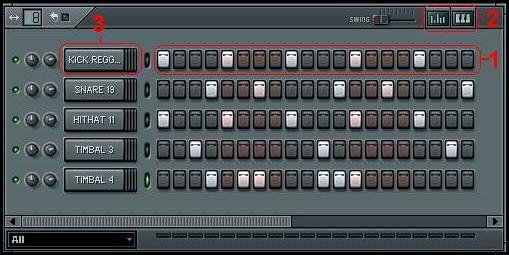
at any rate, getting back to questions of style, aside from using so many snares, reggaeton producers tend to stick to some tried-and-true formulas: bombastic synth textures, plucky melodies, 4/4 kicks (usually at a midtempo pace--say, 90-110bpm), and that good ol' dancehall-reggae 3+3+2 syncopation (played on snares, natch).

of course, the 3+3+2 subdivision is common to all kinds of caribbean styles. you can thread it through reggae and mento, soca and calypso, son and salsa, merengue and meringue. but when it comes down to it, especially when we're talking about kicks and snares playing the 3+3+2, reggae has come to claim this rhythmic pattern. moreover, with the recent resurgence of roots reggae in the dancehall, the pattern seems to be making a comeback in jamaica, as heard on such smashes as I wayne's "can't satisfy her" (as i note at the end of my roots riddims tutorial).

let's take a look at (and a listen to) the pattern in question:


[note: i removed the hi-hat in both examples below for the sake of clarity.]

if played at, say, 100 bpm, it sounds like a typical reggae/reggaeton track: listen.

if played at, say, 160 bpm, the pattern above sounds much more like a soca riddim, or a particularly juiced-up merengue beat: listen.

you can hear in these two examples the fundamental relationship between tempo, rhythmic pattern, and style. the difference between soca and dancehall, between merengue and reggaeton is a mere issue of speed--at least in a basic musical sense; let's not forget, though, that the cultural contexts for these styles are often rather different. (of course, the arrangements--i.e., the rest of the voices/instruments in the texture--are often rather different, too.) similarly, at the same tempos, with shifted rhythmic patterns (away from the 3+3+2 and towards a more "four-square" beat), these kicks-and-snares would cohere into something more closely resembling hip-hop or techno. [incidentally, those who came to this post looking for basic fruityloops lessons, or who would like to see the basic differences between hip-hop, techno, and reggae styles, should go here.]

dancehall's distinctive bomp-bomp, as put forward famously by the pepperseed riddim, boils the 3+3+2 down a kind of essence. before dave kelly cooked up that rhythmic rundown, though, the sound of dancehall reggae was the sound of the pattern above--the sound of 4/4 kicks and 3+3+2 snares. (think of the bam bam riddim as heard on "murder she wrote" or just about anything off super cat's don dada album.)

the sound of dancehall reggae from the late 80s and early 90s is the sound of reggaeton today. and that's no coincidence.

by the late 80s reggae had gained popularity around the world, and dancehall was increasingly popular in urban centers, especially caribbean urban centers. thus, spanish-speaking audiences in panama, puerto rico, and new york (which, yes, is a caribbean urban center), increasingly became not just consumers but producers and performers of reggae music. panama's longstanding relationship to jamaica, which had sent large numbers of migrant workers to help dig the canal, meant that panamanian artists like el general were among the first to record spanish-language reggae. early recordings, such as el general's "pu tun tun" (or "tu pun pun"), were essentially translations of contemporary reggae hits (in this case, little lenny's "punaany tegereg"), using the same riddims and often converting the lyrics of the original almost word-for-word. (see the album dancehall reggaespanol for a great introduction to these early recordings, including their sources of inspiration and featuring some rather informative liner notes.)

the popularity of these spanish reggae tracks in the tri-state area helped the approach to catch on among new york's puerto rican (not to mention dominican and cuban) communities, which in turn helped to fuel what was undoubtedly a burgeoning scene already in PR (which, lest we forget, is not very far from jamaica). ever the cultural crucible, new york nurtured a musical conversation among its post-colonial peoples. it is the crystallization of reggaeton style in san juan in the 1990s (in close conversation with nuyorican developments) that leads to PR's current, almost undisputed claim to reggaeton. interestingly, the riddim track that many people cite as being the "planet rock" (see, miami bass) or the "drag rap" (see, nawlins bounce) of reggaeton is the backing to shabba ranks's "dem bow"--a riddim produced by bobby "digital" dixon and a beat that remains a staple in reggaeton. (daddy yankee, for instance, talks about freestyling endlessly over the dem bow back when he was cutting his teeth.) while jamaican dancehall moved on to minimal and maximal permutations of that ol' bomp-bomp, reggaeton stuck with the ain't-broke boom-ch-boom-chick-boom-ch-boom-chick, recognizing that it overlayed rather nicely with salsa and merengue and claiming it as the new sound of (urban) latin america.

at this point, reggaeton has already gone global, riding on the coattails of hip-hop's and reggae's international appeal, not to mention the international socio-cultural circuitry of the spanish-speaking world. although it is not surprising, it is significant that reggaeton has become the most popular youth music not just in the PR and DR and panama but in cuba, colombia, belize, and increasingly in mexico, chile, and non-caribbean latin america. of course, it's big in japan. and there appears to be a thriving scene these days in the UK, complete with a magazine/online-portal (if conflated there with spanish rap), a series of regular dances (alongside dancehall, of course), and some locally-fueled coverage of the wider history and cultural significance of the music.

reggaeton has been mainstream in the US since nina sky and nore took it there last summer. daddy yankee took it to the bank this spring. and in yet another interesting development--and a weird flip-side to english-language reggae being adapted to spanish--i've recently heard some english-language reggaeton showing up on boston's "official #1" for blazin' hip-hop and R&B!. this could be seen as a bit of a threat, as most of reggaeton's stars have yet to break into the american mainstream. (shit, we're still waiting for a true tego hit. maybe on the new album.) i don't think there is much to worry about though, as reggaeton's core audience isn't about to abandon don omar to whomever p.diddy trots out as the new face of urban music. (britney spears's attempt at the style, see "the hook-up" on in the zone [ignore the jamaican-sounding dude and listen to the beat], seems to have made nary a ripple.) what the appearance of english-language reggaeton does demonstrate is that reggaeton is not simply spanish-language hip-hop or reggae. it is a recognizable musical style in its own right, one that is evoked with kicks and snares and synthesizers. (and, no doubt, luny tunes are still the kings of the beats.)

the music has an amazing amount of momentum going for it right now, and reggaeton will undoubtedly change as it continues to find adherents in various local contexts around the globe. being such a diffuse scene to begin with (san juan's claim as capital notwithstanding), it would seem that reggaeton is poised to shift with its new circumstances. in spite of what some might perceive as rhythmic conservatism, it is reggaeton's steady caribbean polyrhythm, in all its modern, digital splendor, that gives the new style such compelling coherence, such distinctive force. and it would seem only a matter of time before unremarkable synth textures and one-finger melodies are replaced by the vibrant strains of salsa samples, indian flutes, and whatever else one wants to fit into its solid template (making it an omnigenre on par with hip-hop and dancehall, and one based, yet again, on the creative re-use of well-worn materials). if in the meantime, however, you get bored listening to the latest confections on the radio, just focus on the snares.

7.01.2006

jajaja


el mudo, "chacarron"


pardon -- pero estoy un poco atrasado en esta canción.

i know i heard this song some time ago, but it wasn't until recently that i gleefully rediscovered it. here's how it happened. i got a couple CDs of "reggaeton dominicano" and "bachaton de reggaeton" from deb pacini-hernandez, a colleague with whom - alongside raquel rivera - i've been working on a lil' reggaeton project (and the author of the book on bachata). upon listening, i was struck by a very goofy, familiar tune propelling some lyrics that are, more or less, total gibberish. (no tiene que comprender espanol para saber eso.) i knew i had heard it somewhere before, so i googled "reggaeton mumbling" and - sure enough - i found reference to it on the first page of returns. (interestingly enough, the discussion was over a year old! and based on an experience in aruba !!)

i've been piecing the story together bit by bit. the song, "chacarron" (or "chacarron, macarron"), appears to have been recorded by a mexican act called el mudo (i.e., the mute - thus, the mumbling; get it?). despite not yet cracking stateside radio in "who let the dogs out" fashion, over the course of the last year and a half or so, "chacarron" has become quite the internet phenomenon. not only are there various versions circulating - including, i'm told, a merengue version and a "coolie dance"-propelled remix, not to mention the one on the CD deb sent me, which began with a little kid "reciting" the song's "lyrics" - but it has inspired a host of homegrown engagements: from babies dancing on desktops to more ytmnd action than you could (repeatedly) shake a stick at. there's even a piece of WoW machinima, including one character busting a convincing - and appropriate - macarena.


the "macarena" - a novelty dance hit, par excellence - is probably a good point of comparison for "chacarron," and no doubt the song will find its place in the pantheon of dumb global pop anthems. (and not 'dumb' meaning 'bad,' but 'dumb' meaning 'dumb.') oddly enough, this would seem to represent something of an arrival for reggaeton. even if plenty of people heard daddy yankee's much less gimmicky "gasolina" as a novelty of sorts, "chacarron" is the kind of thing that moms and dads and babies can dance to and sing along to at the ballgame, and that's not necessarily an insignificant gain for reggaeton in the current (stateside) cultural climate. the song's clearly stimulating quite a bit of conversation around the net and the world, seemingly finding more fans than detractors (which is a flip for reggaeton -- perhaps the most widely denigrated genre in recent years, despite its popularity.)

in terms of the song's sonics, i have to admit that i find quite a bit to like. sure, it's a low-fi, (purposely?) amateurish recording, but it's got a certain undeniable joie de vivre alegría de vivir. the bassline is fat and insistent, and they use a little bit of variation to go a long way. the sudden appearance of the beat from kurtis blow's "the breaks" - complete with a switch in cadence from reggaeton-ish to rap-ish - not only fits well into reggaeton's longtime explicit engagement with old-and-new-school hip-hop, it makes a clear (if possibly problematic) stylistic point about the difference in performing an african-american-patterned version of musical blackness vs. reggaeton's (increasingly?) caribbean/creole sonic subjectivity. at any rate, el mudo appears to be parodying both, and to great effect.

///

allow me to close with an anecdote - and an mpfree! - from the jayne and wason files.

when my brother and i were about 8 and 10, respectively, and well in the throes of an unmitigated love for run DMC's "king of rock" (our first rap tape!), we made some recordings in our bedroom under the name "bust-a-rap, bust-a-rhyme." yup, this was well before we'd heard of busta rhymes, and i'm not sure who was bust-a-rap and who was bust-a-rhyme, but it didn't particularly matter.

our idea of rap composition was downright bizarre and, if i may, brilliantly dumb. i regret to this day that our blank-tape EP has been lost to the ether.

the reason i bring it up is that most of our songs sounded like "chacarron." here's how it would go. i would provide the accompaniment, but rather than beatboxing, i would pick a phrase of some sort - usually the song title - and repeat it, more or less verbatim, for a couple minutes, occasionally throwing in an odd interjection about cheese doodles or some other random adolescent preoccupation. then, over my backing, my brother would enter with an improvised, syncopated, nonsensical rap-cadence (copped from run and DMC, no doubt) and throw down a verse and a chorus or two before we called it a song. we would come up with a title, work out a quick arrangement, and then record the song - one take only. i can't really do justice to the sound in prose, i'm afraid, but we were way ahead of our time, as can be gleaned from this partially remembered tracklist:

1. "bust-a-rap, bust-a-rhyme"
2. "i'm a turtle, i'm a turtle"
3. "canonballs"
4. "do do do do do do do do do"

oh man. that tape would be a goldmine right now.

at any rate, back to the connection to "chacarron": our signature, eponymously-titled song, "bust-a-rap, bust-a-rhyme" - the lead single, no doubt - actually shares, fairly closely, the cadence of the chorus to "chacarron." and jay's improvised verses are even similar to the kurtis blow section of el mudo's hit. i'm not sure what to make of this, except that maybe there's a universal unconscious way of mumbling through a novelty rap and maybe - just maybe - my brother and i (on some smoosh ish) could have had a worldwide hit back in the days. ah, if only we had a ourspace instead of toshiba boombox...

here's my best attempt at a re-creation of the ol' bust-a-rap, bust-a-rhyme sound. partially successful, totally weird.

we were better when we were younger, less self-conscious, and not-just-me-multitracked-and-pitchshifted-in-ableton.

(cross posted to the riddim method)

10.07.2006

ni chicha ni limonada


in pursuing the chacalonero thread further, i've been in conversation with joshua tucker, an ethnomusicologist at UT-austin (and the guy previously in my shoes), who knows a thing or two about music in peru.

clearing up some of my questions about sr. chacalon jr. -- that link, btw, dates "perreo chacalonero" to at least feb/05! -- as well as about chicha more generally (the music, that is), joshua has helped me to hear the phenomenon in better context:
First, I can't help but notice that the song itself is remarkably similar in form and tone to "Mesa que mas aplauda," which was huge in Peru a couple of years ago, when it was huge all over Latin America. (If you don't know it, it's here. And I'm sure the story behind it's floating around on the internet as well.) Rooted in chicha sounds instead of merengue, but still, the procedure, such as it is, seems to be the same, and the themes of over-the-top sexuality fit pretty well.

As for the whole Chacalon link, I can't help but think that the popularity of this Chacalon Jr. (who I have never otherwise heard of) has surged since the (really good) telenovela about his father aired last year. I can't help but wonder of he was making chicha music until pretty recently, when reggaeton arrived in Peru (in c. 2003-4), and that any success he's got is piggybacking on his ability to market himself in his father's name.

Which is interesting, because this thing, and the whole reggaeton phenomenon in Peru generally, fits very obviously and perfectly with chicha's earlier position. Despite the whole academic fuss over chicha being a kind of hybrid fusion of the Andes and the international sphere, it's important to remember that the actual listeners didn't, and don't, hear it that way: they hear it as a local variant of cumbia, nothing more. That is, it was a very deliberate identification with (tropical) pan-Latin (working-class) musical currents instead of any locally available identities, on the part of Lima's poorest sectors. This video, of the kids onstage, looks EXACTLY like a chichodrome: I mean it is one, or it probably becomes one on another night of the week, and this music is catering to exactly the same audience that chicha catered to a generation beforehand.

And what's FURTHER interesting, actually, is looking at that in light of the debate that you link to - look at post number 280, where a woman upbraids Chacalon Jr. for not making music like his father, saying "esa si fue musica," when in fact, until say, ONE YEAR AGO, the general reaction to Chacalon's chicha was pretty similar to the rejection of perreo you see on that list - in class/intellectual (the same thing in Peru) terms that is: the erotic element wasn't there in chicha's dismissal, but the overtones of moral panic were (linked to generic gang violence and hoodlumism instead).

Only other thing I can really think to say is that I'm pretty sure this came from a DVD being sold on the street in Peru - they all start with that same film-reel thing.

muy interesante, no? (not to mention generous, joshua, thx again.) after señor tucker asked if i had any additional, more specific questions, i shot him the following:
I do have one specific question. Not knowing much about chicha, I wonder if you could point me to the particular features of "Perreo Chacalonero" that signify chicha. Is it a pretty typical example? Save for the vocals? I'm assuming that the "perreo" thing comes from reggaeton, but there's little about the track that points to reggaeton other than those references. Is there anything particularly atypical about the musical backing?

to which, he graciously replied:
...the sound of a wah-wah guitar like that, especially with the light, nominally "tropical" percussion underneath, in a Peruvian context instantly signifies "chicha" to the (this) listener. Chicha was a local version of cumbia, made by and for Lima's expanding "popular" sector (in the Latin American sense of the word - working-class), almost 100% composed of Andean migrants, beginning in the late sixties, becoming stylistically consolidated through the seventies, and dominating the Peruvian "popular" music scene in the eighties. It basically took some key elements of pan-Latin cumbia as it existed at that time - light "tropical" percussion, the basic eighth-and-two-sixteenths rhythmic pattern - and substituted electric guitars, later keyboards as well, for the melodic instruments typical of cumbia. According to most academic analyses, performers also took some of the elements of Andean melodies, and it's true that they occasionally arranged (folk-pop) huaynos, and also that many chicha melodies use the same waffling between relative major/minor modes that's used in huayno music. However, it was perceived, like I say, more as a link to an international, pan-Latin musical stream, a local variant of cumbia, than anything else. And it was reviled by Peruvian elites: today, the word "chicha" has expanded to be somewhat equivalent to the English term "white trash," it denotes everything
esthetically and socially unacceptable about the lowbrow masses among the plebe, from the perspective of Peru's (self-)perceived economic/intellectual creme.

Oh, performers also adopted the stage presence, coordinated moves, and outlandish matching costumes of cumbia stars:
http://www.tropiweb.4t.com/shapis.jpg

You can see and hear the greatest of chicha bands, Los Shapis, looking older and more rotund than in their heyday but sounding exactly the same, here - and check it out, before the clip begins, you get a little promo for the production company with a number of musical figures and the words "supporting what's ours," and that your guy, Chacalon Jr appears there alongside Los Shapis:
http://www.youtube.com/watch?v=tOGMl10OECg

So, in that example, you hear the classic chicha guitar sound, and the classic percussion: clean and stripped-down, respectively (btw, as with Mexican cumbia et al, salseros and other aficionados of esthetically/politically "engaged" musica tropical loathe this stuff for its simplicity/childishness, depending on how you perceive it). Later bands did use a wah-wah kind of sound, but I think it might also have become more prominent in chicha's nineties-era reincarnation, as tecnocumbia. Tecno- here has nothing to do with Detroit: in Peru, it's appended to any musical tradition that's traded acoustic for electric instrumentation, especially if it uses a drum machine to replicate "tropical" percussion (hence, tecno-huayno and tecno-huaylas). Tecnocumbia came around in the mid-nineties, and like Raul Romero notes in his article in the collection From tejano to tango, it was kind of extraordinary to the extent that it bridged the gap between what had been fairly strictly demarcated ethnic/racal listening communities. That is, for a while: up until about 2001, it was listened to by people of all kinds in Peru, at all places on the race/class spectrum: however, between the time that I lived Ayacucho from June-August of 2000, and when I returned in August of 2001, it had pretty much faded back to radio aimed at the "popular" sector.

But what's funny is, tecnocumbia was just repackaged/re-marketed chicha! Like Raul says in that article, it was basically chicha that had been de-Andeanized, had the key signifiers of Andean migrant-ness removed from it. The music was presented as being from the Amazon (a place just recently developing in the Peruvian consciousness as a peopled part of the nation), or alternatively the north coast, and many tecnocumbia bands were simply chicha groups that had traded in their (highly chicha-connotative) electric guitars for keyboards (I think that's a direct quote from Raul).

This didn't fool everybody, and a lot of people just kept calling it all chicha. Also, I should note that some people will almost certainly insist that some of these bands that converted into tecnocumbia groups were never "chicha" groups, but rather "cumbia norteña" groups, such as Agua Marina. Again, whatever interest people on the north coast might have in dissociating themselves from the "chicha" label, the music was pretty much the same stuff - you tell me:
http://www.youtube.com/watch?v=lLOAgHFLxtM

Anyway, this is based on half-remembered impressions, but it seems to me that many tecnocumbia bands have made more liberal use of the wah-wah sound than happened in chicha per se: but the line bleeds pretty thin here.

I'm glad you also find nothing here that points to reggaeton - I couldn't see it either, but I figured you're the expert as far as that goes! About what's atypical - I've never seen this approach in any Peruvian music, to have one repeated musical figure (sample?), over which the (frankly, lazy) vocalist does nothing but exhort the dancers/listeners and repeat the name of the song. Both of those things - the (highly "performed") laziness of the vocalist (DJ?) and the repetition of the actual track title - are what made me think of "Mesa que mas aplauda." Oh, and the sex. I just can't believe it's coincidental: it's true that Peruvian tecno- bands (of whatever ilk) always have "animadores," guys who encourage the audience to dance and drink and such, but they're always supporting a vocalist that actually sings.

Anyway, I hope that's interesting/helpful to you as well - feel free to put any of it up, noting the caveat that I don't know anything about this track and am out on a limb a bit...

i can't say that i have much to add to joshua's thoughtful, thorough comments. i suppose the features he identifies at the end -- heavy repetition, a DJ exhorting dancers, explicit sexual content (and called "perreo" at that) -- are the most likely to have been borrowed from or inspired by reggaeton (if not reggae -- weh yuh seh, fire links?). i've been wondering about reggaeton in peru for a minute now, both b/c i'm curious about the genre's spread beyond the caribbean and the US and b/c afro-peruvian singer susana baca (who sells her music digitally via calabash, btw) is here in chicago this week. one thing i happened upon not long ago which confirmed, if somewhat implicitly, the popularity of reggaeton in peru is this piece, in which daddy yankee endorses music piracy and we're told that his hotel in lima is mobbed by fans.

but how clearly can we connect the "perreo chacalonero" to reggaeton? i'm not sure. little if any of the discourse i've seen on any of these video comments, message boards, etc., seem to figure reggaeton in the debate. instead people focus on the (im)morality of the dance, the "lowness" of such cultural practices, and the attendant inferiority of this or that national or social or cultural group. considering how reggaeton animates similar debates in PR, DR, cuba, and the US, it's interesting that it hasn't been more implicated -- as a corrupting outside agent, sin duda -- in all the chatter 'bout the chacalonero.

6.13.2006

!cabron! que reggaeton !

remember that observation i made last summer with regard to the snares in reggaeton?

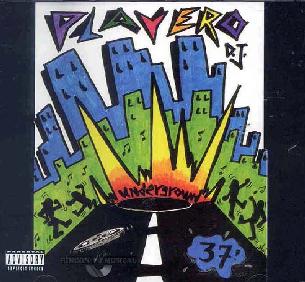
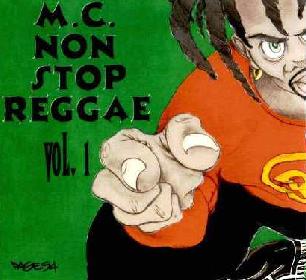
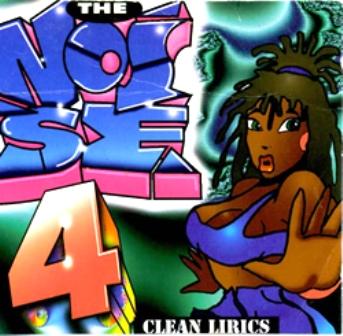
well, i've put together a thing or two since then that help explain where this remarkable, distinctive practice of switching snares every several measures or so has its beginnings: puerto rico in the early 90s, of course, i.e., during the dembow era, when underground referred to raggamuffin flows over sample-based beats, and when top DJs/producers, such as playero, and night clubs / mixtape series, such as the noise, were synonymous with a genre that wasn't so much unnamed as overnamed, bursting with significance and signification, and perhaps not so much "underground" as it was "undergrown" (as i once misread the cover as saying).

it was no doubt growing assiduously, though, and the music and scene have undergone a great deal of growth and change since those early days. even so, the latest reggaeton productions continue to embody this early history - significantly submerged as it may be - in their very sonic structure. mainly, the snares. you see, back in the days of what dj/rupture calls "proto-reggaeton," when the spanish-language reggae/rap made in san juan was called any number of things (including some nasty epithets), you could hear the snares switch just as regularly as you do now. you might not notice though, since everything else would change too.


if you listen to puerto rico's underground music of the 1990s you hear - by and large - a series of flip-tongue, sing-song vocalists rocking risque over homemade versions of recent reggae riddims and hip-hop beats. the favorites are ubiquitous - dem bow, bam bam, drum song - and they cycle in and out of the half-hour to hour mixes that constituted the genre's main medium throughout the decade. not on a song to song basis, mind you, but on a section to section basis, so that a four-bar chop'n'stab loop of the dem bow would be followed by a similar version of a version of the bam bam, then something of the drum song, and so on.

frequently, not only are these loops reassembled - sample-based hip-hop stylee - from well-worn reggae riddims, they're composites of several of them. thus, at times, the dem bow drums might roll along with the bam bam guitar and/or the drum song bass - not to mention the syncopated snare and heavy hi-hat from slick rick's "mona lisa," the sax riff from the 45 king's irrepressible, irresistable "900 number" loop, the bassline from special ed's "i got it made," marley marl's immortal "symphony"-flip of otis redding's piano intro, and various other old school and contemporary hip-hop references. these chopped-and-rearragned loops of recognizable fragments make for a rather resonant mix, and over such steadily shifting accompaniment spanish-slanging MCs with dancehall-derived flows skip triple-time over the beats, often while intoning one of those two-or-three-note dancehall melodies that jamaican DJs have endlessly reworked since the early-mid 80s and which are especially characteristic of early 90s dancehall (a/k/a, ragga).


so those famous shifting snares in all the newest nuendo-nicked pistas played and programmed by luny tunes, et al., are quite closely connected to this foundational practice of versioning the versions, of taking a hip-hop hatchet to reggae's pop-will-eat-itself aesthetics, creating dense, sample-based collages that engage and embody, as they directly index, the popular and no doubt political (for san juan youth) "musica negra," as they used to sing on mixtapes before the tagline became "reggaeton latino" - the "black music" that resounded across the soundscapes of san juan and new york, home and home-away-from-home, and animated a specific sort of youth- and class-based cultural politics in the late 80s and throughout the 90s.

in some ways, the practice is rather consistent with dancehall reggae's own approach to riddim production in the early 90s. think of cutty ranks's "a who seh me done (wake the man)," which shuffles between the familiar strains of the bam bam and a downbeat-centric, hip-hop-inflected beat, or dave kelly's action riddim - another favorite source for underground pistas (via that inescapable terror fabulous and nadine sutherland joint) - a track which juxtaposes starkly contrasting calls and responses to create an effective, affective form. (really, who can resist when the riddim's propulsive percussion yields to - or breaks before - that gloriously naked, bubbling bassline?) the approach also presents a striking parallel to brazilian funk's deployment of a small set of core (electro/bass-derived) rhythm tracks against a panoply of pop culture references - as sampled, as shouted, as captured in a ringtone.


hearing so many snares with new significance, i wonder whether the change in sound mirrors or informs an attendant shift in cultural politics? does this receding presence of hip-hop and reggae, this disappearing sonic blackness, overlay with a broader drift from class-bred commitments to racial and social justice? as samples of jamaican and african-american music yield to synth melodies inspired by merengue, bachata, salsa, freestyle, club/house, and even "tecno" (que chipmunk hoovers!), how do these figures inform the lines of community we draw in our imaginations and interactions? what might the ghostly connections between today's slick, synthetic anthems and the rough-and-rugged, cut'n'paste pistas of the 90s say about race and nation then and now?

.. boom ..

i don't know how long it will be up, but for those of you looking to follow this thread yourselves, there is no better resource than lobo lansky's: an utterly amazing and comprehensive archive of reggaeton albums and mixtapes from the seminal playero 37 to don omar's new highest-charting reggaeton debut. dude's got links to videos, too. not all of the albums are uploaded yet, but lansky intends to have it finished and fleshed out to eight pages (!) by july. since he's only streaming, he may be able to keep it up for a while, but i recommend checking it out while it's still right there in all its digitized splendor.


i highly recommend it, actually. i gotta say, i really enjoy this music. not only is it full of resonant references to a lot of my favorite tunes, it's bursting with energy and creativity (despite being so deeply "derivative"). it's fun, funny, and occasionally poignant. it's unhinged and uninhibited. it's critical as it's conservative. it's vanguard and rearguard at once.

it's all mixed up and not afraid to show its seams.

.. cha-boom chick ..

happy listening over at lansky's - keep yer ears on the snears !!

and your eyes, well, here's something for them (from playero 40):

6.27.2006

bubble on


madison skyline, dancing, from lake mendota

  • while we're talking electronic music history, don't miss the vintage "educational film" banananutrament pointed me to.


  • whattaya joe, indeed? despite its quick'n'dirty character, that jimi-TI mash i mashed a minute ago caught some listeners' ears, even prompting requests for a higher-quality version (good lookin'..). in an age of serato and such, how could i not oblige? so here it is in all its 192bit splendor. jimi deserves better anyhow. (and while we're on topic, here's an old jimi remix i did about 7 years ago.)


  • if you're into millions of poems (happy way-belated bday, jordan!) or thousands of paintings, you might like a collage a day.


  • siebe thiessen returns with mo' mixes, including an earful of "post-bubbling" beats.

    been thinking about bubbling a bunch lately. for one, i was trying to track down the person who wrote that piece someone pasted into a comment here a while back. for three, bubbling seems uncannily like (early) reggaeton and rio funk insofar as it approaches its source materials as a vast canvas of fair use / fair game samples, not to mention how it favors certain tracks and genres - sharing a good number of early90s dancehall references with reggaeton (but seemingly drawing on a lot of filmi too, at least recently, accding to auratheft), and even chopping up well-worn breaks and rapidly retriggering drums in a similar manner to both "proto-" reggaeton and "baile" funk, as well as drawing heavily on hip-hop, r&b, and - in a much heavier manner than reggaeton or funk (where the odd hoover is never too out-of-place) - rave music (e.g., hardcore techno). and who can resist those beefed-up, chopped-up soca-tempo drum tracks and half-time, double-time samples? it's funky, interesting stuff, yet oddly, it's largely ignored in poco-beats discourse, to coin a phrase. (perhaps because it's from "the continent"? too metroprole maybe?)

    [update: just recovered this ugandan article on reggaeton which, not insignificantly, uses the term "bubbling" to describe the author's reception of the genre's early efforts, noting explicitly the link to the most seminal - and bubblin' - dancehall riddims of the day. 'n round and round we go. love to hear some of that dj rota and dj shiru stuff.]


  • and while we're on online mixes, let me direct you to tim r-j's first avant classical mix. it's funky and interesting too !

1.19.2006

!oye!


i've got a long, linky piece on reggaeton in this week's phoenix. it's my latest take on the subject, and after noticing recently that my "so many snares" post from last summer found itself on a "best music writing" list for 2005 (and one for/by "rockcritics" at that!), i find myself in the strange position of wondering whether this piece in print will live up to the blog-post that preceded it (and which essentially opened the door for it).

not that y'all needed another reggaeton article. clearly, the music has become the darling of the NY international press, and that's part of what i wanted to try to get at in the phoenix piece--to examine the differences between reggaeton's presence in the mainstream soundscape and its representation in mainstream discourse. (not that the folks linked to in that first sentence don't get at these things, but i wanted to bring a bit more of the ethnomusicologist in me to the proceedings.) between attempting to provide an overview for those who have somehow managed to stay oblivious to reggaton's inroads and attempting to provide a depth and breadth of analysis not often found in the mainstream press (never mind sticking to a rather generous word count!), i found writing the piece to be something of a challenge.

i hope it lives up to the prominence it was given. (cover story!) but i'm not sure that a newspaper article can really ever communicate about music the way that a blog or a DJ mix can. one of the things that made the blog-post special, i suppose, was its combination of text and audio (and images), or as they put it over at rockcritics.com: "aural demonstrations of what's being explained in detail." in an attempt, then, to augment this latest texty thing i'm throwing at you, allow me to "throw some bows" at you, too. dem bows, that is.

i posted a "dem bow mix" over at the riddim method. check it out, download it, and let it provide a jump-off for further travels. reggaeton's a rich, rich world (and getting richer)--and opens up to many others. i'm just scratching the surface blin-blin.

9.07.2005

colombia is better with u in it


spotted in arlington, MA: oh yes they did.

  • you know bush-and-them done fucked up when a thomas friedman op-ed reads like this. just when i had relegated dude to the david-brooks never-read-again ghetto, friedman comes through with some scathing criticism. do i sense a ripple across these toxic waters?


  • and just when you thought the greyhound experience couldn't get any worse...seriously, though, do we really need to send all these folks to prison at this time? again, PRIORITIES people! jeez.


  • i was wondering whether the cash-money/no-limit folks found their cribs under water: according to his own IM admission, baby lost like 12 condos and eight houses. hope the master recordings were kept high and dry.


  • cocaineblunts representing for nawlins bounce and nawlins folks. get your download and donation on ASAP!


  • in other bounce-related news, i always thought it was something in the (dirty) water, but DJ C, via the phoenix, gives up the not-so-secret formula for boston bounce, the name of a new style (soon to be MIA) and a party we're playing tonight. that shit was supposed to be on the down-low, but down-load is close enough, i guess. should be a fun time at any rate (135 bpm or otherwise).

  • go bay state!: massachusetts to drop microsoft office.


  • mas yo!: i got a little more quotation love, albeit an odd fragment, in a well-informed piece on reggaeton in last week's journal news (but unless you live in westchester county--yonkers! mt.vernon! white plains! where ya at!?--you prolly missed it).


  • in other reggaeton news: emanuel mistakes my poetically-licensed title for bragging and says he has mucho mas snares que yo (plus backs it up with some plucky bangers).


  • meantime, a bunch of rockist assholes couldn't care less (or could they?). and i discover that my reggaeton post is what "Everyone links to ... when people ask them to justify listening to reggaeton!!!" (beware bloggers: there's power in this thing.) seriously, though, is there any good reason why people ever bother to validate the often unbelievably low level of discourse over at ilm with actual responses? (and, yes, i'm occasionally guilty, too, but usually just to clear my good name.) next thing we know they'll be posting doctored jpgs of each other.


  • speaking of doctored pics, found this at flickr:


  • finally, apparently houston's been spending so much time in new york, they're even reppin' uptown ivy-league schools in they videos now.


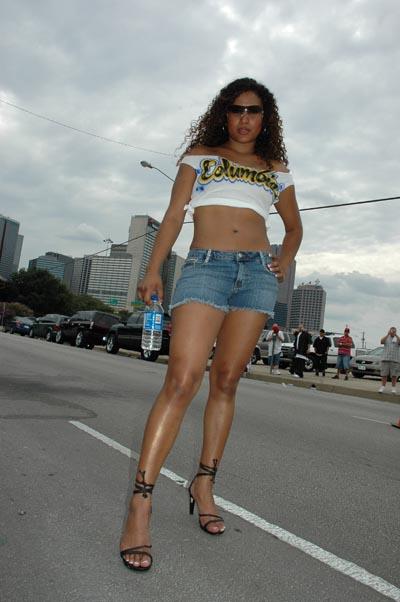
    boricua, morena, dominicana, columbiana...

5.04.2006

dembow demo


NYC gente:

i'll be giving a "dembow demo" at hunter college this friday, may 5, as part of a symposium called, "a closer look at reggaeton," sponsored by the center for puerto rican studies and moderated by raquel rivera.

despite the title of the thing, i plan to focus more on listening than looking. specifically, i'll discuss and demonstrate (and DJ!) the dembow riddim: what it is (and how it's put together), where it comes from, how it relates to panamanian reggae en español, how it informs the emergence and coherence of the style known today as reggaeton, and how we can hear its presence and resonance - and thus reggae's presence and resonance - in contemporary productions.

should be a good conversation. despite some recent chatter about the music's decline, i don't think reggaeton's going anywhere any time soon, and it certainly has given us plenty to talk about already. the event starts at 6, and it's free of charge.

10.17.2005

bubble up


photo by richard roo

parallel movements, anonymous comments, pirate blogographies...

what is to be done??

/////

someone left the following notes in a comment to my reggaeton post. left no name, though, so i don't know how to follow up on this fascinating bit of post-colonial, euro-caribbean roots'n'future. (though a google search turns up a (suspiciously?) similar looking document in dutch.) i see the parellels to reggaeton here--though jungle seems like a closer cousin, at least musically, given the sped-up ragga records and all. (then again, album art like this seems much more in line with reggaeton's thematic predilections.)

i reprint the comments here with the hope that it can dig up a bit more info on yet another node in the network of transatlantic sonic afromodernity. those who are more engaged with the dutch ABCs and dutch colonialism may find the following representation of interest.

Bubbling:
It began in The Hague (Holland) in Club VOLTAGE in 1988 with Dj Moortje, MC Pester and MC Pret. From 1990 became this kind of dancing, together with the music very popular in all the big clubs in Holland. The tabloids and newspapers saw this,so called ,Bubbling as a new sexy style of dancing. Some say it first was an expression of hidden protest, born at the antillian youthculture.

Bubbling act at swing cafe La Vie en Rose during the 100% R&B party.
1.1 .Bubbling in the media and at the clubs. When they talk in the tabloids and newspapers about Bubbling, they mention always the way of dancing. They say that Bubbling is a girldance. No wonder that they call Bubbling dancing also “the art of the asturn” or “ erotic dancing” “soft porn” or “dry sex”. Bubbling means also competition. Almost every weekend there is a contest anywhere in the country, for the best Bubbling dancer, the best Bubbling Dj or the best Bubbling outfit. These contests usually announced weeks in front by flyers and posters, they tell wich Dj’s are perform and wich girlbands are coming and last but not least, how much money you can win. Only the dancing is rather new, because Raggamuffin, the music that comes with Bubbling, is nothing else but to play a 33speed record at 45speed together with digital Reggae-music mixed with Hip Hop. The Bubbling rythem sounds like Tambu, an old Antillian slavedance.

1.2 The musicstyle Raggamuffin is born in 1985 and has its roots from Jamaica. The Bubbling in Holland is rather different then the Bubbling in Jamaica and England, because in Holland the Bubbling is played at a much higher speed then anywhere else. This ‘so called’ Mickey Mouse style is coming from Holland. The founder of this uptempo Bubbling is DJ Moortje from Curacao. Since 1988 the most popular Bubbling Dj in Holland. He played by accident in a club a reggea song at the wrong speed and the crowd went crazy, so a new style was born and became a big success.

1.3 But Bubbling is more than a popular dance and a musicstyle, it is also an expression of protest, like Bubbling entertainers Rodrgo La Cruz and Reynaldo Chirino, alias MC Pester and MC Pret. They give a new meaning to this music style with there lyrics against the system in Holland and Curacao, the Police and Justice, discrimination and other topics. Also in there own comunity the people do not like them because of these lyrics.

1.4 .From 1990 Bubbling is played in all the big clubs in Holland with Dj’s like Dj Memmie, Dj Son and ofcourse Dj Moortje. But it began in The Hague at the Club Voltage in 1988 with Dj Moortje, MC Pester and MC Pret. From that moment this trio began to organize Bubbling partys. The people who came to the Bubbling partys where mostly mature Antillians from near The Hague. These Bubbling Partys were also social events.During these events the people talked about the problems they are faced with. While DJ moortje was playing the Bubbling records, MC Pester and MC Pret were doing there lyrics with the songs like “Balia Sanka” (shake your ASS), a song MC Pester hase made during his period as a streetmusician.

1.5 .In the beginning the Bubbling-partys were not a big success, so the owner of Club Voltage organised Balia-Sanka partys, and gave a price to the best hips and ass swinging girl of the evening.. After that, the partys became a bigger success, and the crowd became much younger.

10.04.2006

¡pooh bear, yo le conozco apenas!


as some attentive, clicky readers might have noticed in my last post about the exploding latin american youtubosphere, i finished by asking how to say "omg!" in spanish, pointing to yet another video that leads to dozens of videos. that one, however, goes well beyond the "yasuri yamileths" out there, demonstrating -- with well-known cartoon and kids-show characters no less (para niños!?!) -- the latest dance craze to sweep latin america, or at least peru: the "perreo chacalonero"!

now, many of you are probably familiar with the perreo, the aptly-named doggy-style dance that goes hand-in-hand (torso-in-torso?) with reggaeton. scandalizing older generations and bucking middle-class mores, the dance was apparently banned for a short time by the PR govt, a move which seems only to have popularized it further. plenty of clubbers will recognize the dance as simply the sort of grinding or freaking that has been a staple of (american, if not global) club culture for some time now.

at any rate, the perreo chacalonero is a variation on the perreo which features far more explicit moves, if that can be imagined. it's about as public an example of simulated sex as one can get. according to this news clip (whose exxxplicit footage requires one to be registered on youtube to see it -- tho this one doesn't), the perreo chacalonero has become an "escandalo" in peru and, if one goes with the sensationalist rhetoric, is provoking moral panic in chile and argentina. (as one can see from the comments on that vid, it has also offered an opening for a class-tinted, historically-fraught flame war between chileans and peruanos, among others -- and there's more along those lines in various other comment threads. [thx to galeb numa for the navigation and explication!])

interestingly, like so many other viral video dance crazes, the perreo chacalonero appears to be tied to a specific track (by papa chacalon and/or his son, chacalon jr -- still tryna track that down), though there seems to be a wider genre of recordings which seem to inspire this sort of drrty drrty dancing. the phenomenon thus represents yet another localization of the reggaeton template, bringing in andean/cumbia elements and making connections to other local pop (though, admittedly, i need to listen and learn a lot more before i make any more grand musical-analytical statements -- any especialistas out there want to offer an opinion?).

videos of the latest forbidden dance have also, as with yasuri yamileth and chacarron, elicited no small number of parodies and DIY take-offs, including versions featuring legos and plenty of gleeful homoeroticism.

but the pooh bear footage takes the cake. ¡aydiosmio!

9.13.2006

academish


  • becca's and charlie's class has begun. par for the course, she and the other instructors will be keeping a blog as they go, attempting to document the successes and missteps and nitty-grit and whatnot of offering harvard's first course open to the public. the first and second lecture videos are already up, as is becca's first post, or two or three.

    [i do disclaim!: in that first post-class post, bec calls me her "husband" (which is true, but weird for me to see all anonymous in the third person like that) and she quotes "sexy jesus"; also, for the record, i was never forced to answer the riddle of the three hats, which is good b/c i'm not very good at riddles.]


  • prof twist had his students do the chicken-noodle-soup dance last week, which prompted me to ask whether they'd be doing the wu tang next. which prompted joe to hope for a nationwide city-by-city competition for most distinctive dance-and-song phenom. (which would be awesome.) which prompted me to recommend he read /jace's post on reggaeton from dec 04 in which señor ruptcha wishes "lean back" wouldn'ta been the kind of dance craze to preclude other dances crazes. (which, happens to be maybe the best and most poetic take on reggaeton i've seen to date.)

    [also, i like how joe uses utilizes the word "utilizations" after "pedagogical" in the title to underscore the silliness of "pedagogical" -- which, i have to admit, is a better word than "teachagogical" and a better word than "utilizations."]


  • the dancecult list brought to my attention (and now i to yours) a couple academish academisch articles on EDM, if you're into that sort of thing:

    1) an ambitious undertaking to reconceptualize rhythm, which features a few too many mixed metaphors and theory "pre-sets" for my taste

    and

    2) an article by luis (inparis!), which seeks to reclaim the pleasures of repetition -- tout court !! -- from all the utterly unfunky music theorists out there. (not that i don't know plenty of some perfectly funky music theorists.)

    [and i mean perfectly. (jk! feelin cheeky today. lology.)]


  • but the best thing i've read in the last few days is kofi agawu's new piece in the current JAMS: "structural analysis or cultural analysis: competing perspectives on the 'standard pattern' of west african rhythm." any of y'all who've done any west african percussion playing will know the pattern he's talking about: that ol' 12/8 bell pattern which, as has been said, holds everything together. well, as usual (but it's still dazzling every time), agawu does an excellent job discussing the extant discourse and showing why he has some good ideas about the subject. identifying each mode's strengths and weaknesses, he proposes an approach that dispenses with neither "structural nor cultural points of view" but instead brings them to bear on each other, all in the name of "developing" -- as a research community, he means -- "a cross-cultural analysis of african rhythm" (6-7). i won't give the rest away because it's a pleasure to read and i couldn't possibly edify like agawu.

    of course, this being JAMS, the footnotes are where a lot of the heavy lifting happens. allow me to reproduce for you but one which will give a sense of agawu's tone and procedure here:


    [the piece is good enough -- and writing about it inferior enough, that it's making me want to start pdf blogging. i mean, we got enough mp3 bloggaz around here already. in the name of open courses, anyone up for reading along this semester?]

1.14.2006

T&T's reggae rennaissance


keep your ears open for prophet benjamin

just got a note from my man danish, a trinidadian selector/music-enthusiast who moved from new orleans to atlanta to san juan in the last year. every now and then danish hits me up with his impressions of the trinidadian or jamaican or wider caribbean music scene. his keen observations often identify emerging trends, as in this missive from last august, which i should have posted immediately as it is now out-of-date (and already was referring to a trip taken in june). still, as sudden as stylistic shifts can be in this music, his thoughts here remain an incisive summation of recent movements in reggae:
I was in JA in June for a couple weeks and just wanted to bounce off you what I noted as the current trends in the dancehall space.

- firstly, pertinent to your recent blog post, there are a couple riddims in JA (one of which has a Bounty called 'top billing') that actually have the drum pattern AND tempo of reggaeton...yuh know how the radio is, many times they do not tell you the riddim names. Reggaeton really is on de up and up...heard a track or two in France, even back home in T&T we're loving it (as we enjoy all 'wining' music).

- secondly, the 'one drop' seems to be no longer at the top, in my books. Sad to say, this was inevitable..phases in dancehall are, almost by definition, fleeting. This was one was positive for the most part but it has given away to something I rank as delightful, Man...I callin it 'retro'...Starting with the 'sleepy dog', a classic sounding ol' school riddim, slow tempo with a WICKED ol' school style Assassin, and another strong track from Vegas. The runaway tune on de riddim is Buju's 'Zoom Zoom' that sounds like it was recorded 12 years ago! Buju in particular has spearheaded this retro revolution and is singing girls tunes in the same vein as 'voice of jamaica' days...The 'throwback' riddim rewords the riddim of 'coca cola bottle shape' with some strong tracks from Vybz (showing his versatility with a ol' school pattern), Ele (for a change) AND Buju! De Buju DONE de place...'mi baby mother seh mi bad, mi too bad, mi too bad, mi too bad, mi too bad, mi too bad, mi too bad'...brrrrrap!
for those who are curious about the contemporary scene in T&T, i offer up (immediately this time) some selections from an email i just received from him:
Was just home for Christmas/New Years as is customary, and it's an extra-exciting time for me as it is the start of the Carnival season and new releases-a plenty are pouring forth from the illegal street vendors, radio stations, etc.

First thing to note: in the wake of the monumental success of Marlon Asher's "G#nja Farmer", it's heralded the era of 'Trini Reggae' with a cadre of talented local artistes making some truly quality conscious reggae music (the most prolific of which is a Bobo named Prophet Benjamin). There is a recently released compilation 'Reggae Roadblock' featuring the local reggae hits, both by lesser-knowns as well as a ragga-soca artist Benjai (with a WICKED weed tune called 'I got something'). Boss, it's truly an excellent conscious compilation, and has garnered immense support from the local party goers and radio DJ's (who often sadly are more partial to Jamaican and American artists/music outside of Carnival season)…so much so that the Carnival fetes thus far would feature at least Prophet Benjamin (who apparently has a WICKED combo with Bunji Garlin)…that is new ground, King...local reggae acts in Carnival fetes? And I know us, as a people, will appreciate it.

In the future, we might witness a couple more of the popular ragga soca artists voicing conscious reggae tracks; I know they have the talent to do so and with the slew of 'conscious soca' over the past few years from the likes of Maximus Dan, Bunji Garlin and even Machel Montano (known as a slackness artist for years, but perhaps on the best in the game), it's a natural progression (even moreso with the 'mainstream' reggae community's current love affair for the one-drop).
and before i could post this here entry, i received the following follow-up:
Am tuning into what's probably the top urban station at home www.red967fm.com online and just heard de Prophet Benjamin/Bunji compilation and it WICKED! Is actually a hype ragga soca track bunnin fire on police, etc…
so, yeah, go search this stuff out if you want to hear what's running the airwaves in trini today. (and try these sites for some audio teasers: trini jungle juice | toronto-lime | 1extra.) meantime, i'll be sure to keep you posted of danish's musical intimations in the future. dude's off to india in a couple weeks, so who knows what news his next email will bring.

8.26.2005

dosa buena


3.08.2005

(at) odds and (brazilian) ends


thanks to simon for pointing me to funk carioca impresario dj marlboro's new fotolog. lots of amazing pictures of brazil's hottest baile parties here and plenty of gushing testimonials (if you know portuguese). dj marlboro's been at the forefront of the favela funk/rio baile/funk carioca/brazilian bass scene for a while now. and he drops some knowledge about the whole shanty-shebang in this hyperdub interview.

also, check blissblog for simon's measured riposte to chistgau's drubbing of his ambivalent review of the new MIA record. i think simon makes some great points here and raises some necessary questions about the 'politics' of everything from the sampling practices on arular to its projection of a terrorist/freedom-fighter image. (i'd like to weigh in on this myself at some point, but i still haven't heard the whole thing. we'll be listening to M.I.A. in next week's electronic music class, though, so i'll be putting together my thoughts pronto.)


finally, in other 'shanty-house' related business, the BBC has a new piece that seeks to make sense of the rise of reggaeton by excavating some of its complex history. clearly, there is still some debate as to reggaeton's birthplace. i remember seeing a poll a while back which seemed pretty equally divided between panama and PR. at this point, the defining history has yet to be written, though it seems as though both places have a genuine claim to the music--panama as a late 80s birthplace of sorts (though undoubtedly puerto ricans were tuning into reggae around the same time) and PR as the place of real commercial flowering (though i'm not sure we can leave new york and new jersey out of the picture). the story is certainly one with lots of twists and turns, and it hinges on migration to and through NYC. i'm enjoying watching the story unfold, which is better, even with (and perhaps especially because of) all the contention, than it remaining untold. (thanks to tobias for pointing me to the beeb piece.)